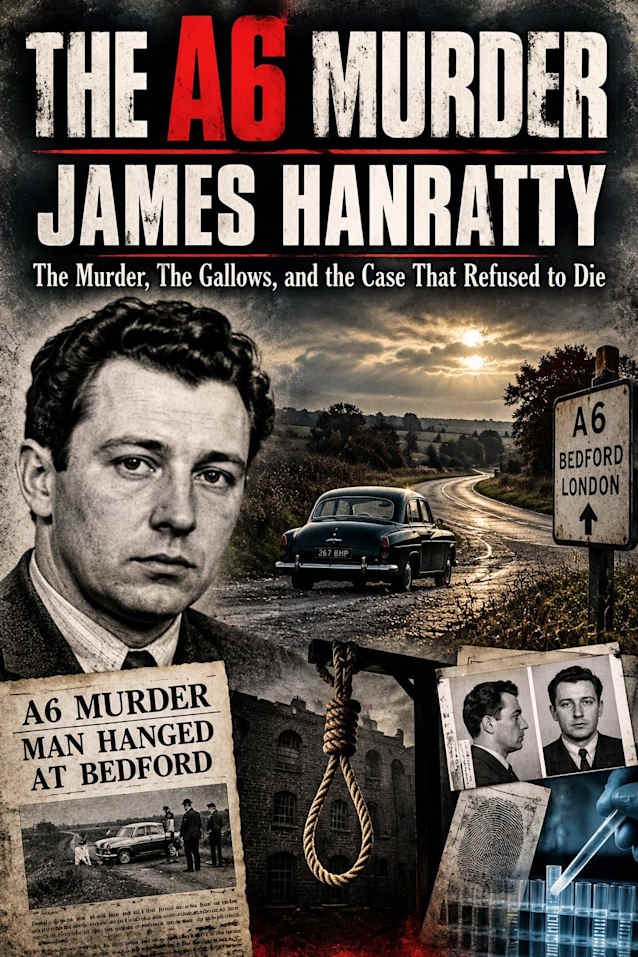
The A6 Murder - James Hanratty: The Murder, The Gallows, and the Case That Refused to Die
About
One night of violence. A death sentence. Forty years of argument.
In August 1961, an armed man approached Michael Gregsten and Valerie Storie as they sat in a Morris Minor in Buckinghamshire. Hours later, Gregsten was dead. Storie had been raped, shot and left for dead beside the A6. She survived, with injuries that would change the rest of her life.
James Hanratty was convicted of Gregsten’s murder and hanged in April 1962. His execution became the beginning of a campaign that would last for decades.
His family and supporters challenged the identification evidence, questioned the investigation and pursued accounts they believed could establish his innocence. The case became entwined with Britain’s argument over capital punishment and the terrible consequences of a verdict that could never be undone.
Then forensic science brought the surviving exhibits back into the courtroom.
In 2002, the Court of Appeal dismissed Hanratty’s posthumous appeal, concluding that the DNA evidence established his guilt beyond doubt. Understanding that judgment, however, requires understanding the long history that preceded it.
In The A6 Murder — James Hanratty, Bill Stewart follows the crime, the investigation, the trial, the execution and the campaign to reopen the case. He examines what the original jury heard, what emerged afterwards and how later scientific findings changed the weight of the evidence.
Throughout, Michael Gregsten and Valerie Storie remain at the centre of the account: two people whose lives must never be overshadowed by the controversy surrounding the man convicted.
Written as documentary narrative, without invented dialogue, this book distinguishes established facts, disputed claims and inference.
For readers of British true crime, criminal justice and the history of capital punishment, this is an examination of a case whose legal conclusion arrived four decades after the gallows.